


There is a quiet ache when a person you care for does not share that feeling. Learning How To Get Over Someone Who Does’nt Love You Back is a slow process that asks for patience and honest self-reflection.
I remember nights when the world felt small and every memory seemed larger than life. Those moments taught me that healing is not a destination but a journey. It asks that you be gentle with your heart and patient with time.
Many people treat a breakup like failure. But losing a relationship often means losing a part of identity, and that pain is natural. By changing the way you view the past, you can build a new foundation for later relationships and growth.
Key Takeaways
- Healing is a process that needs patience and self-reflection.
- Seeing an end as growth helps shift perspective.
- Grief after a breakup reflects meaning once placed on the relationship.
- Time and kindness toward yourself speed the recovery.
- Lessons learned shape healthier future relationships.
Understanding the Pain of Unrequited Love
Unreturned affection can sharpen ordinary days into quiet reminders of loss. This kind of hurt is not small. It can feel like a missing part of your heart and change how you walk through life for a while.
The Nature of Loss
The pain of unrequited love is a real loss, not just a disappointment. In 2009 I spent New Year’s Eve alone and felt how a single night can make each memory louder.
At 28, I learned that grief for what never was deserves time and patience. Friends may help, but they cannot replace the exact connection you miss.
Why We Cling to the Past
Many people hold on because a relationship gave meaning to daily things. Letting go can feel like losing a part of your routine and identity.
Acknowledging the loss is the first step. Mourning what you hoped for makes room for new chances and helps you notice life beyond that person.
- Unrequited love can make ordinary day-to-day feel heavy.
- Past friendships and memories shape current feelings.
- Allowing time to grieve opens space for future relationships.
How To Get Over Someone Who Does’nt Love You Back
Facing the simple fact that someone isn’t invested can be quietly freeing. Accepting this reality is the clearest way to begin leaving unrequited love behind.
Mitzi Bockmann notes that trying to convince another person to return affection is often doomed. You might feel like you can change a partner’s mind, but the truth is feelings cannot be forced.
Start by naming the ending. That honest step stops the hunt for signs and reclaims energy wasted on a dead-end path.
- Accept the situation as a necessary course correction.
- Recognize past patterns that lead to the same outcomes in relationships.
- Choose kind actions toward yourself instead of chasing someone who won’t invest.
| Action | Why it helps | Quick result |
|---|---|---|
| Acknowledge reality | Ends denial and rumination | Less anxiety |
| Stop searching for signs | Stops false hope | More energy |
| Refocus on life goals | Builds self-value | Clearer future |
In time, you will see this breakup as part of a larger truth: you deserve a partner who is fully present. That realization is the kind shift that starts real healing.
Validating Your Emotional Experience
When a future you imagined disappears, the heart often reacts with deep, honest sorrow. That reaction matters. Unrequited love is a real form of loss and deserves care.

The Importance of Grieving
Accepting your feelings is the first step. It is a fact that you can grieve the future you pictured with a partner.
Validate each feeling without judgment. Tell trusted friends what you feel. Say it out loud if that helps.
- Validating your feelings speeds the healing process.
- You are losing more than a person; you are losing hope and shared plans.
- Taking time to process prevents long-term weight from suppressed emotions.
| Need | Why it helps | Quick action |
|---|---|---|
| Validation | Confirms feelings are real | Say, “This hurts” |
| Grief time | Allows emotions to surface | Set aside quiet moments |
| Gentle care | Protects self-worth | Rest, small comforts |
By naming your pain and honoring emotions, you create space for future healthy relationships. This process takes time, but it leads toward steady growth.
Creating Healthy Distance
Creating room between you and that person lets your emotions breathe and settle. Making clear space is a practical step for emotional health.
Small changes can mean cutting in half the time you spend talking with them. It can also mean a pause from seeing a person face-to-face.
If certain friends keep bringing up that person, consider stepping back from those conversations for a while. Protecting your heart is not rude; it is wise.
- Set clear boundaries so you can rest and recover.
- Pull back energy if you have been doing too much for someone who does not return it.
- Use the free time to focus on life, friends, and relationships that lift you.
- Limit interactions so feelings have room to fade and you can see things more clearly.
Giving yourself this kind of space supports long-term health. Over time, the intensity eases and you regain one calm step at a time into dating and into living.
The Neuroscience of Heartbreak
When a relationship ends, your brain often treats the loss like a withdrawal. That truth explains why feelings can feel relentless and why nights of thinking about a person drag on.
Dopamine and Obsessive Thoughts
Romantic infatuation floods the brain with dopamine. That chemical rewards attention and recall, so memories loop more easily.
Obsessive thoughts are often a biological response, not a moral failure. Your mind seeks the missing reward and replays things as if searching for it.
The Role of Obstacles
Research shows that romantic intensity often lasts about 6 months to 2 years, with 18 months common for infatuation.
When obstacles keep a relationship out of reach, that lifespan can stretch. This is why unrequited love can feel so persistent.
Knowing this gives a practical way forward: your pain is a natural process. With time and small interventions, intrusive thoughts ease and the heart heals.
- Understanding dopamine helps reduce shame about the breakup.
- Recognizing obstacles explains why feelings persist longer than expected.
- Seeing the brain at work makes the truth of temporary pain easier to accept.
Shifting Your Focus Away From Romantic Media
Turning off romantic films and skipping love-heavy posts gives your heart room to breathe. Quieting romantic media reduces the pressure to measure life against a script. This step helps stop constant comparisons and eases painful feelings after loss.
Choose content that supports personal growth. Pick books about skill-building, podcasts about career or hobbies, and shows about adventure or science. These choices change the stories your mind absorbs.


“Protect your mental space by being selective with what you watch and read.”
- Shifting focus away from romance stops unrealistic comparisons.
- Consuming other genres gives your mind a break from longing for a person.
- New hobbies and interests fill time with life-affirming things.
| Action | Why it helps | Quick result |
|---|---|---|
| Limit romantic shows | Reduces trigger cues | Fewer intrusive memories |
| Read non-romance books | Builds new perspectives | Boosted self-focus |
| Try new hobbies | Shifts attention away from relationship ideals | Fresh enjoyment in life |
Treating Your Feelings as a Separate Entity
Imagine your emotions as a guest in your home, not the owner of the keys. Naming the ache lets you step back and see it more clearly.
When you feel like your feelings hijack a day, speak to them as if they were a third person. Tell that person what you need. Ask for space and say when their visits are okay.
This simple way reminds you that feelings are temporary. In moments of unrequited love, distance helps. Over time the urge to replay memories eases.
- See emotions as separate from your whole self.
- Talk to the feeling like a needy friend.
- Give it limits so you can return to daily tasks.
| Action | Why it helps | Quick effect |
|---|---|---|
| Name the feeling | Creates distance | Less overwhelm |
| Speak to it | Clarifies needs | More control |
| Set limits | Protects routine | More focus |
Using this method in a relationship recovery gives gentle power back. Treat the inner voice with respect and it will lose its demand for all your time. You keep living, learning, and opening to new love.
Channeling Emotional Energy Into Personal Growth
Turn your restless energy into a project that grows the person you want to be.
When a past relationship drains you, redirect that power toward learning or a creative habit. I once used heartbreak as fuel and studied for the LSAT. That focused work rebuilt my confidence and gave me clear progress to track.
Finding Creative Outlets
Creative outlets let you express feelings that words cannot hold. Try art, music, or writing for short daily sessions.
Many people discover new talents when they stop pouring energy into a person who does not return it. Spend time with friends who encourage growth and try small experiments in life.
- Channel emotions into study, art, or a skill.
- Use short goals to build steady confidence.
- Let supportive friends nudge you toward new things.
| Outlet | Why it helps | Quick step |
|---|---|---|
| Study or course | Structures time, boosts skills | Enroll in a short class |
| Creative project | Channels feelings into product | Start a 15-minute daily sketch |
| Social activities | Rebuilds community and joy | Plan one outing with friends |
Even if the person you loved did not reciprocate, your energy is useful. Redirecting it into things that matter creates momentum. Over time, this work reshapes your life and opens room for healthier relationships.
Rebuilding Your Sense of Self
Finding your center again starts with simple acts that remind you of your own worth.
Rebuilding identity after a relationship means looking inward and clearing your mind. Take quiet moments and give yourself time to notice what matters now.
Look for signs of strength. Small wins show resilience. Celebrate things you enjoy, even if they feel minor at first.
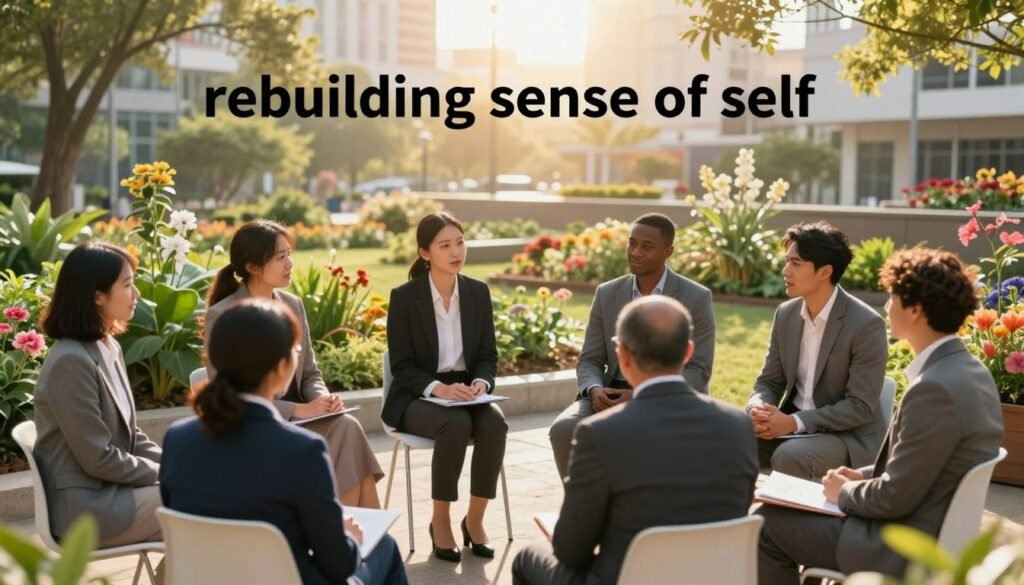
Many people find they neglect their own needs in trying to please a partner. You are a whole person, not defined by a relationship.
- Do one small activity that makes you happy each day.
- Write what you value in life and in a future partner.
- Watch for signs of growth as your days gain steadier meaning.
| Action | Why it helps | Quick step |
|---|---|---|
| Daily small joy | Rebuilds confidence | Spend 15 minutes on a hobby |
| Value list | Clarifies future needs | Write five priorities |
| Notice resilience | Affirms progress | Journal one win each evening |
By focusing on personal growth you prepare for healthier relationships. Over time your mind will find clearer answers about who you are and what you deserve.
Seeking Professional Support
As days blur with replayed memories, professional help can bring clear direction. Reaching out to a licensed therapist is a brave, effective course when heartbreak feels overwhelming.
Psychologist Sandra E. Cohen, Ph.D., notes that talking with a therapist can be life-changing for people who struggle to move on. A skilled clinician helps you name patterns, sort complex feelings, and build practical steps for recovery.
A therapist can show why you may keep choosing the same kinds of relationships and teach tools to break those cycles. Prioritizing your mental health is a kind act that pays off over time.
Reading expert books can supplement therapy. Consider John Gottman’s 7 Principles and Marshall Rosenberg’s Nonviolent Communication for clearer skills in relating.
- Therapist support gives tailored guidance for unrequited love and grief.
- Professional help helps navigate intense pain and shifting feelings.
- There is no shame in asking for help; it protects your long-term health.
“Asking for help is often the most important step toward finding peace.”
| Resource | What it helps | Quick action |
|---|---|---|
| Therapist | Personalized healing plan | Book an initial session |
| Books | New perspectives on relationships | Read one chapter |
| 28-page ebook | Deeper guidance on emotional needs | Download and review |
Embracing the Future
A single closed chapter can be the quiet start of everything that follows.
Looking back, my past unrequited love gave friendships more depth and taught me maturity. Those hard days shaped how I trust others and how I value honest connection.
Embracing the future means accepting that the end of one relationship is the beginning of a new chapter in your life. It is a fact that, with time, happiness returns even if today you might feel stuck.
Every person you meet offers an opportunity to learn about your wants and grow. By letting go of the reality you once hoped for, you make room for unexpected experiences.
“You are stronger than you think; this day may later read as the moment your life turned toward something better.”
| Step | Why it helps | Quick action |
|---|---|---|
| Accept the end | Stops rumination and frees energy | Write one honest sentence about the outcome |
| Take small steps | Builds steady momentum | Plan one activity each day |
| Open to people | Creates new connections and joy | Say yes to one invite this week |
Keep moving forward, one small step at a time. You deserve someone who returns your care, and that future waits if you keep the faith.
Conclusion
Small choices each day chart the path from hurt toward steady recovery. Honor your feelings, set clear boundaries, and practice gentle self-care as you rebuild.
Healing is a steady journey that needs patience and acts of growth. Surround yourself with kind people and seek a therapist if the pain feels too heavy.
Remember: worth does not depend on another person’s response. The ache will ease, and a more authentic life waits ahead. Trust your strength and focus on the future with small, steady steps.


