
Feeling disconnected from loved ones can be very painful. When emotional bonds start to fray, it makes people wonder what went wrong.
It’s important to understand the causes of emotional distance to bridge the gap. This issue is complex, influenced by personal, relational, and environmental factors.
By exploring the root causes of emotional distance, people can start to heal and rebuild their relationships.
Key Takeaways
- Emotional distance can stem from various personal and relational factors.
- Understanding the root causes is key to resolving emotional detachment.
- Rebuilding emotional connections requires effort and commitment from all parties involved.
- Recognizing the signs of emotional distance is the first step towards healing.
- Effective communication is key in overcoming emotional detachment.
Understanding Emotional Distance in Relationships
It’s key to grasp the complex nature of emotional distance in relationships. This state makes partners feel apart and lacking in closeness. It can strain the bond between them. Emotional distance often develops gradually, stemming from unresolved issues, unmet needs, or a lack of communication. As partners drift apart, they may begin to feel isolated, leading to misunderstandings and resentment. To combat this distance, it is essential for both individuals to engage in open dialogue, express their feelings, and actively work towards reconnecting. Building trust and fostering intimacy can help bridge the emotional gap, allowing partners to feel more united and supported.
Definition and Common Manifestations
Emotional distance shows up in different ways. It might be a lack of talking, less affection, or feeling far from your partner. Signs include spending less time together, avoiding deep talks, and not caring about each other’s lives.
How Emotional Distance Differs from Conflict
Conflict is about disagreements and tension. But emotional distance is about feeling disconnected or not emotionally involved. Conflict can show passion and engagement. Emotional distance usually means pulling away or losing interest. While conflict can sometimes lead to resolution and growth, emotional distance often creates a void that can be challenging to bridge. Understanding these differences is crucial for couples, as recognizing when they are experiencing conflict versus emotional distance can guide them toward appropriate solutions. By addressing conflicts constructively, partners can foster intimacy, whereas acknowledging emotional distance requires vulnerability and a commitment to reconnecting on a deeper level.
The Impact on Relationship Satisfaction
Emotional distance can really hurt how happy you are in a relationship. Feeling apart can lead to loneliness, anger, and frustration. This can make you less happy overall.
To tackle emotional distance, you need to understand its roots and work on reconnecting. By spotting the signs and taking action, couples can make their bond stronger. They can create a more emotionally rich partnership.
The Psychology Behind Emotional Detachment
Exploring emotional detachment shows a complex mix of factors. It’s not just a simple issue. It’s deeply tied to how we form and keep relationships. Emotional detachment can manifest as a withdrawal from emotional engagement, leading to misunderstandings and a lack of intimacy. This detachment often stems from past experiences, fears of vulnerability, or a desire to protect oneself from potential pain. Recognizing these patterns is crucial, as they can hinder the development of deep, meaningful connections. By addressing these underlying issues, individuals can begin to heal and rebuild their relationships, fostering a healthier emotional landscape.
Self-Protection Mechanisms
Self-protection is a big reason for emotional detachment. People might pull back when they feel vulnerable or have been hurt before. This way, they try to avoid getting hurt again. But, it can lead to feeling alone and problems in relationships.

Attachment Styles and Their Influence
Attachment styles come from our early life with caregivers. They shape how we connect with others as adults. Those with insecure attachment styles might find it hard to be close, leading to detachment. Knowing your attachment style is key to fixing emotional distance.
The Role of Emotional Intelligence
Emotional intelligence (EI) is key in dealing with emotional detachment. People with high EI can recognize and manage their emotions better. This helps them have healthier, closer relationships. On the other hand, those with low EI might find it hard to handle their feelings, causing them to pull away.
Understanding the psychology of emotional detachment helps tackle its causes. This includes self-protection, attachment styles, and emotional intelligence. By addressing these, we can work on building stronger, more meaningful connections.
Communication Breakdown: A Primary Cause of Emotional Distance
When we stop talking, our emotional connection can suffer. Good communication is key to staying close in relationships. Open dialogue fosters understanding and intimacy, allowing partners to express their thoughts and feelings freely. When communication breaks down, misunderstandings can arise, leading to feelings of isolation and resentment. To nurture a strong bond, it’s essential to prioritize regular conversations, actively listen, and share vulnerabilities. By doing so, we can prevent emotional distance and cultivate a deeper connection.
When Words Go Unsaid
Unspoken words can hurt as much as the wrong ones. Suppressing feelings and thoughts can make us resentful and frustrated. This pushes us apart.
When we don’t share our needs, our partners guess. They often get it wrong, leading to misunderstandings.
Misinterpretation and Assumption Patterns
Misunderstandings and assumptions can harm a relationship. Assuming we know what our partner feels without asking can be wrong. This can start a cycle of blame and defensiveness. For instance, if one partner feels neglected but doesn’t communicate this, the other might misinterpret their silence as indifference. This miscommunication can lead to increased tension and emotional distance, as each partner may become entrenched in their own perspective, unwilling to bridge the gap. Over time, these unresolved feelings can accumulate, making it even harder to reconnect.
Criticism and Defensiveness Cycles
Criticism and defensiveness can quickly turn into a bad cycle. When one criticizes, the other gets defensive. This leads to more criticism.
To stop this, we need active listening. We must be willing to see things from our partner’s point of view without getting defensive.
By fixing these communication issues, couples can close the emotional gap. Understanding what makes us emotionally unavailable helps us talk openly and honestly.
Unresolved Trauma and Past Relationship Wounds
Past traumas can impact our current relationships. Unresolved trauma and past relationship wounds lead to emotional distance. These experiences can make it hard to trust and be close to others. The scars from previous relationships can create a protective barrier, causing individuals to withdraw emotionally, fearing vulnerability. Additionally, when we carry unresolved issues, we may misinterpret our partner’s actions, projecting our fears onto them. This cycle of misunderstanding can further entrench emotional distance, making it crucial to address and heal from these past wounds to foster healthier connections.
Childhood Experiences That Shape Adult Connections
Our early life, including neglect or abuse, shapes our adult relationships. Childhood trauma makes it hard to trust and connect with others. Bessel van der Kolk says, “The body keeps the score” of traumatic experiences, affecting our health.

Previous Heartbreaks and Their Lasting Impact
Past heartbreaks, big or traumatic, can cause emotional distance. The pain and fear from these experiences make it hard to open up. Unprocessed emotions from heartbreak block intimacy.
How Unprocessed Emotions Create Barriers
Unprocessed emotions from past traumas or heartbreaks lead to emotional distance. This distance can protect us but also prevent deep connections. Sue Johnson says, “The key to a secure relationship is processing emotions together.”
By facing and healing from past wounds, we can build better relationships.
The Major Causes of Emotional Distance in Relationships
Understanding why emotional distance happens is key to keeping relationships strong. It can come from many complex reasons.
Fear of Vulnerability and Rejection
Being scared to open up is a big reason for emotional distance. People fear being rejected or hurt if they share their feelings. This fear often comes from past experiences where being open ended badly. These past wounds can create a protective barrier, making individuals hesitant to express their true emotions. This hesitation can lead to misunderstandings and a lack of connection, as partners may misinterpret silence for disinterest. Over time, this emotional withdrawal can result in a cycle of isolation, where both parties feel increasingly distant and unfulfilled.
Trust Issues and Betrayal
Trust is the base of any good relationship. When trust is broken, like through betrayal, it can cause a lot of emotional distance. It’s hard to get back, and without it, people feel far apart.
Unmet Emotional Needs
Not having emotional needs met is a big problem. Needs like feeling recognized, validated, secure, and accepted are key to feeling close in a relationship.
Recognition and Validation
Feeling seen and valued is very important. When efforts and feelings aren’t recognized, people start to feel apart. This lack of acknowledgment can lead to feelings of resentment and frustration, creating a barrier to open communication. When partners fail to express appreciation for each other’s contributions, it can result in emotional disconnection, making it difficult to maintain intimacy. Recognizing and validating each other’s feelings fosters a sense of belonging and strengthens the bond between partners, ensuring that both individuals feel cherished and understood.
Security and Acceptance
Feeling safe and accepted is essential for closeness. Feeling insecure or judged makes people pull away as a way to protect themselves.
Fixing these deep issues is the first step to closing the emotional gap. By understanding and addressing these problems, partners can start to reconnect emotionally.
In summary, emotional distance often hides deeper problems like fear, trust issues, and unmet needs. Knowing these causes is the first step to healing and strengthening a relationship.
Emotional Unavailability Triggers and Their Origins
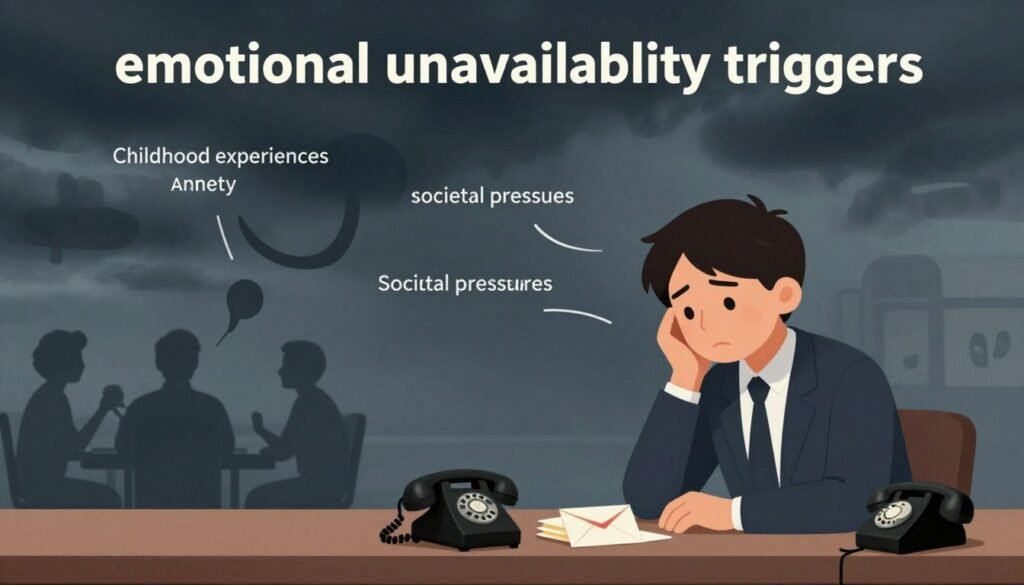
It’s important to know what causes emotional unavailability to fix relationship issues. This problem can come from past experiences or learned behaviors.
Learned Coping Mechanisms
People might become emotionally unavailable as a way to deal with past traumas or stress. These habits can make it hard for them to form close bonds. For example, someone who grew up in a distant family might act the same way in their adult life.
“The way we cope with stress and adversity can significantly influence our attachment styles and emotional availability.”
Fear of Abandonment
A fear of being left can also cause emotional unavailability. This fear often comes from being rejected or abandoned in the past. It makes people pull away from their partners as a way to protect themselves. Seeing this fear is the first step to overcoming it.
Avoidance as Protection
Another reason for emotional unavailability is avoidance. People might stay away from intimacy or emotional connection to protect themselves. This avoidance is often because of the fear of getting hurt or being vulnerable. Understanding why they avoid can help them build better relationships.
By looking into these triggers and their roots, people can better understand their emotional unavailability. This knowledge helps them work towards more fulfilling relationships.
External Stressors That Create Emotional Disconnect
When stress from outside sources builds up, it can split people apart. It takes their focus and energy away from each other. This leads to less talking and feeling disconnected.
Work and Financial Pressures
Stress from work and money troubles often affects relationships. Long hours, job worries, and money issues can make people distant. They become emotionally unavailable.
For example, someone stressed about a deadline might pull away. Money problems can cause fights and make people feel insecure. This makes the emotional gap wider.
Family Obligations and Outside Relationships
Family duties and friendships can also make people feel apart. Taking care of family, keeping up with friends, or helping out in the community takes time. It can make the main relationship feel neglected if not balanced.
For instance, if one partner is too busy with family, it can push the couple apart. They might not feel included or supported.
Life Transitions and Their Impact
Big changes like moving, having a baby, or losing someone can also cause distance. These changes are stressful and require big adjustments. They can make partners feel like they’re drifting apart.
It’s key for couples to talk and support each other during these times. This way, they can avoid feeling disconnected and keep their bond strong.
In summary, stress from work, money, family, and big life changes can hurt a relationship’s emotional connection. Understanding these factors and talking openly can help couples stay close.
Digital Distractions and Modern Relationship Challenges
Digital technology has changed how we connect in relationships. It can make our bonds stronger or weaker. We need to look at how digital distractions affect our closeness and connection.
Screen Time vs. Face Time
It’s important to find a balance between screen time and face time. Too much screen time can make us feel alone and disconnected. On the other hand, spending more time together can deepen our emotional bonds.
Social Media’s Impact on Intimacy
Social media shapes how we see relationships and intimacy. It can set up unrealistic expectations and make us feel like we’re not good enough. This can make us afraid to be open and vulnerable.
Technology Boundaries for Healthier Connections
Setting limits on technology is key for better relationships. This means having device-free times and places. It also means doing things together and being careful not to let technology get in the way.
By understanding the problems digital distractions cause, we can find a better balance. This way, we can build stronger, more lasting relationships.
Bridging the Gap: Effective Strategies to Rebuild Connection
Emotional distance can be tough in relationships. But, there are ways to get past it. To reconnect, you need to tackle the reasons for feeling distant.
Communication Techniques That Foster Closeness
Good communication is key to a strong bond. To get closer, active listening is vital. This means really listening to your partner, getting their point, and responding well.
- Maintain eye contact to show you’re engaged.
- Use verbal and non-verbal cues to show you’re interested.
- Avoid interrupting and let your partner finish their thoughts.
Creating Emotional Safety in Relationships
Feeling safe emotionally is key for trust and closeness. To make a safe space, validate your partner’s feelings. Be true in what you say and do.
- Be empathetic and understanding.
- Be reliable and follow through on commitments.
- Show appreciation and gratitude regularly.
Vulnerability Practices for Deeper Intimacy
Being vulnerable can deepen your bond. Open up about your feelings, fears, and wants. This builds a stronger connection.
- Share your fears and insecurities.
- Be open about your desires and needs.
- Practice vulnerability in small steps.
When to Seek Professional Help
If you can’t bridge the gap on your own, professional help might be needed. A therapist can offer support and advice to tackle your issues.
By using these strategies and working hard, you can overcome emotional distance. This will strengthen your relationship.
Conclusion: Moving Beyond Emotional Distance
Understanding why we pull away in relationships is key to fixing and keeping a strong bond. Things like past traumas, fear of being open, and stress can make us emotionally unavailable.
Knowing these reasons is the first step to a closer relationship. Talking openly, being empathetic, and being willing to be vulnerable are vital. They help close the emotional gap between us.
Creating a safe space for emotions, being open, and getting help when needed can help overcome distance. By using these strategies, couples can build a stronger and more rewarding relationship.
FAQ
What are the primary causes of emotional distance in relationships?
Fear of being vulnerable and rejected, trust issues, and unmet emotional needs are big reasons. Work and money problems also play a part. Knowing these can help fix emotional distance.
How does emotional detachment relate to attachment styles?
Attachment styles really matter. People with insecure styles might pull away as a way to protect themselves.
Can digital distractions contribute to emotional disconnect?
Yes, too much screen time and social media can make us feel disconnected. It’s important to set limits on technology to keep our relationships strong.
What role does emotional intelligence play in emotional detachment?
Emotional intelligence helps us understand and handle our feelings. It’s key for forming close bonds. Having high emotional intelligence can help avoid feeling distant.
How can couples rebuild connection after experiencing emotional distance?
To reconnect, couples should talk openly and create a safe space. Being vulnerable is also important. Sometimes, getting help from a professional is needed.
What are some common manifestations of emotional distance in relationships?
Signs include not feeling supported, less intimacy, and feeling apart from your partner. Spotting these signs is the first step to fixing the problem.
How do past traumas and relationship wounds impact emotional distance?
Unhealed traumas and past heartbreaks can make us pull away. It’s important to deal with these feelings to heal and reconnect.
Can external stressors like work pressures and family obligations cause emotional distance?
Yes, stress from work and family can make us feel distant. Finding a balance is key to keeping our relationships strong.
What is the impact of fear of abandonment on emotional unavailability?
Fear of being left can make us avoid closeness. Facing this fear is important for healthier relationships.
How can individuals recognize and validate their emotional needs?
Knowing our emotional needs takes self-reflection. It’s about understanding what makes us feel complete. Accepting these needs in ourselves and our partners is vital.